
Main Types of Foundation Waterproofing
The foundation is the part of a building that is in direct contact with the soil and is constantly exposed to groundwater, moisture, and atmospheric precipitation. For this reason, foundation waterproofing is one of the most critical stages of construction. It is a system that determines the durability, safety, and longevity of the building.
Selecting the correct waterproofing materials is essential in order to prevent moisture ingress and mold growth, which ultimately leads to structural damage.
Foundation waterproofing is divided into two main types: vertical and horizontal waterproofing.
Vertical Waterproofing protects the foundation surfaces from groundwater and soil moisture. Roll-applied, coating, or membrane materials are used; in some cases, the addition of a protective layer is also required, such as a drainage membrane and geotextile. These materials can be used in combination, which increases the waterproofing's resistance to external influences.
Horizontal Waterproofing prevents the spread of moisture into the walls. It is applied beneath the foundation base and at its upper section, before the walls begin. Roll materials or specialized membranes are typically used.
Main Types of Waterproofing
Several types of waterproofing materials are used for foundation waterproofing. The most in-demand are roll-applied, Liquid, and membrane systems.

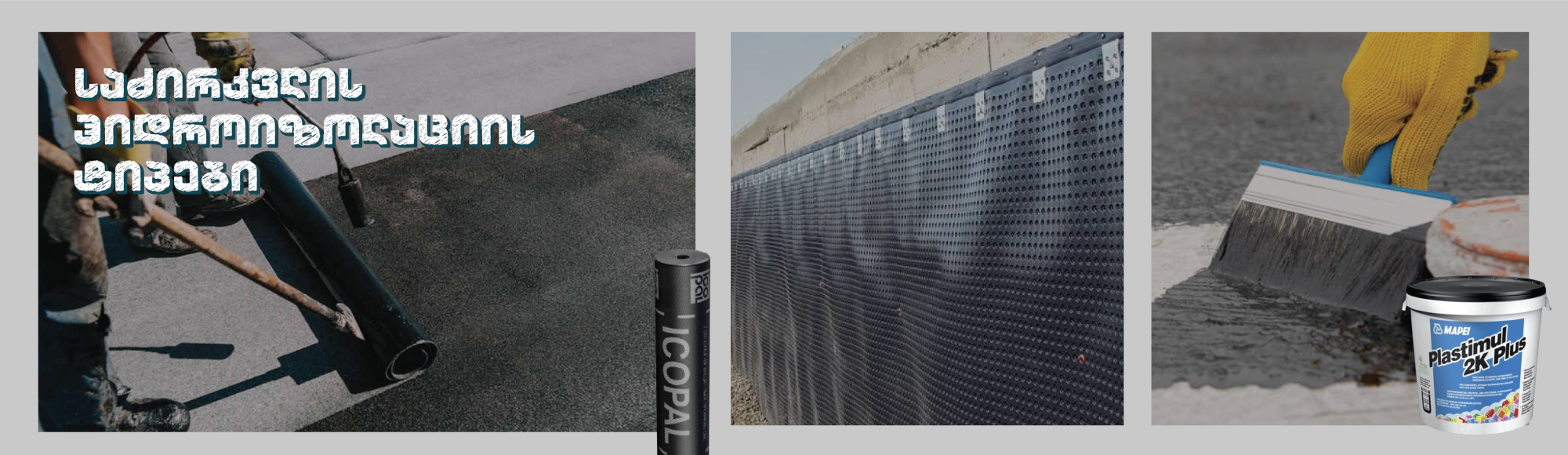
Roll-applied waterproofing is particularly effective for both vertical and horizontal foundation protection. This method involves bitumen-polymer based materials reinforced with fiberglass mat, woven fiberglass fabric, or polyester.
Before laying roll waterproofing on the foundation, it is essential to treat the surface with a bitumen primer, which improves the material's adhesion and ensures better bonding with the concrete.
On vertical surfaces, the roll is applied from bottom to top with a 10–15 cm overlap. For horizontal application, at the junction of the foundation base and walls, the roll is laid as a separate layer to prevent moisture from spreading into the walls.
Advantages: high water impermeability; resistance to mechanical stress; long service life (20–30 years); ideal for conditions with high groundwater levels.
Liquid Waterproofing
Liquid waterproofing creates a continuous protective layer that perfectly fills cracks, fissures, and hard-to-reach areas. It is particularly effective on the interior side of foundations, in basements, and at corners. The material must be applied in a minimum of two coats; it is also important to use waterproofing tape at corners and joints for additional reinforcement.
Membrane Systems
Membrane systems for foundations represent a modern and highly effective solution. HDPE, PVC, EPDM, and TPO membranes are designed for use in deep foundations, basements, and high groundwater conditions — where loads are significant and high-performance, premium-grade waterproofing is required. This type of waterproofing demands modern execution standards and is therefore more costly compared to roll-applied and coating waterproofing.
Properly selected materials and professionally executed waterproofing will protect your building for decades to come.