

Proper Methods for Selecting Tile Adhesive
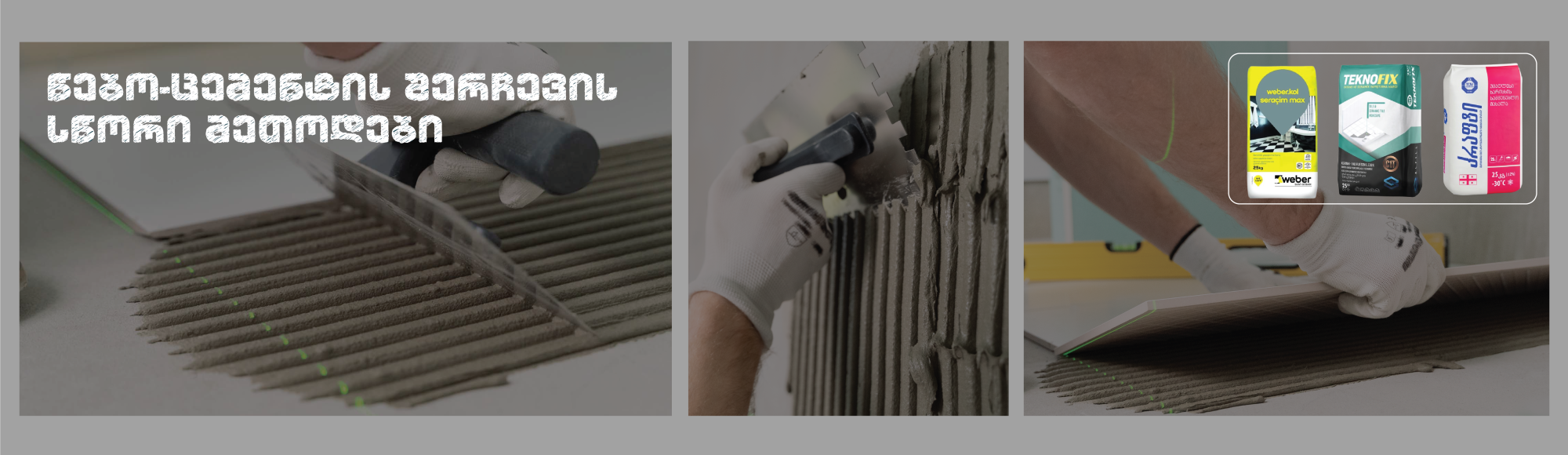
Proper Methods for Selecting Tile Adhesive Cement
Tile adhesive cement is a construction material that ensures reliable bonding of ceramic tiles, porcelain stoneware, natural stone, and marble. Its use has made renovation work more qualitative and flexible - it has replaced the traditional cement-sand mixture and provided faster and stronger fixation.
The choice of tile adhesive cement depends not only on the brand but also on the type of work, tile size, and material.
Type of Work:
There are tile adhesive cements for indoor and outdoor use.
For indoor use, it is advisable to use tile adhesive cement adapted to the appropriate environment, such as KRAFT K3. As for outdoor tile adhesive cements, both KRAFT K5 and K7, as well as ALFIL Finefix, Weber flex porselen, and flex premium granit are recommended. ALFIL Teknofix and Weber SRC Max are used in both indoor and outdoor locations.
Tile Size and Environmental Conditions:
According to adhesion strength, tile adhesive cement is divided into products for small, medium, and large format tiles. Environmental conditions - humidity, temperature changes, and load - determine the need for a frost-resistant product. Often, sellers and buyers do not consider tile size, which leads to unstable installation and short-term results.
WEBER tile adhesive cements are used for both indoor and outdoor work. All positions are frost-resistant; the difference depends only on tile size:
- Small tiles – Weber SRC Max
- Medium and large tiles – Weber Flex Porselen Gri
- Large granite tiles – Weber Flex Premium Granit Gri
ALFIL tile adhesive cements have similar characteristics. As for KRAFT, here we can distinguish between frost-resistant (K5; K7) and non-frost-resistant (K3) materials.
Sometimes, despite considering all details, the result is still undesirable. This is determined by other equally important details, specifically common mistakes when using tile adhesive cement, such as:
Adding Excess Water:
For maximum results, precise adherence to proportions is essential. Adding excess water reduces adhesive strength. Note that the correct dosage is provided on each material's packaging.
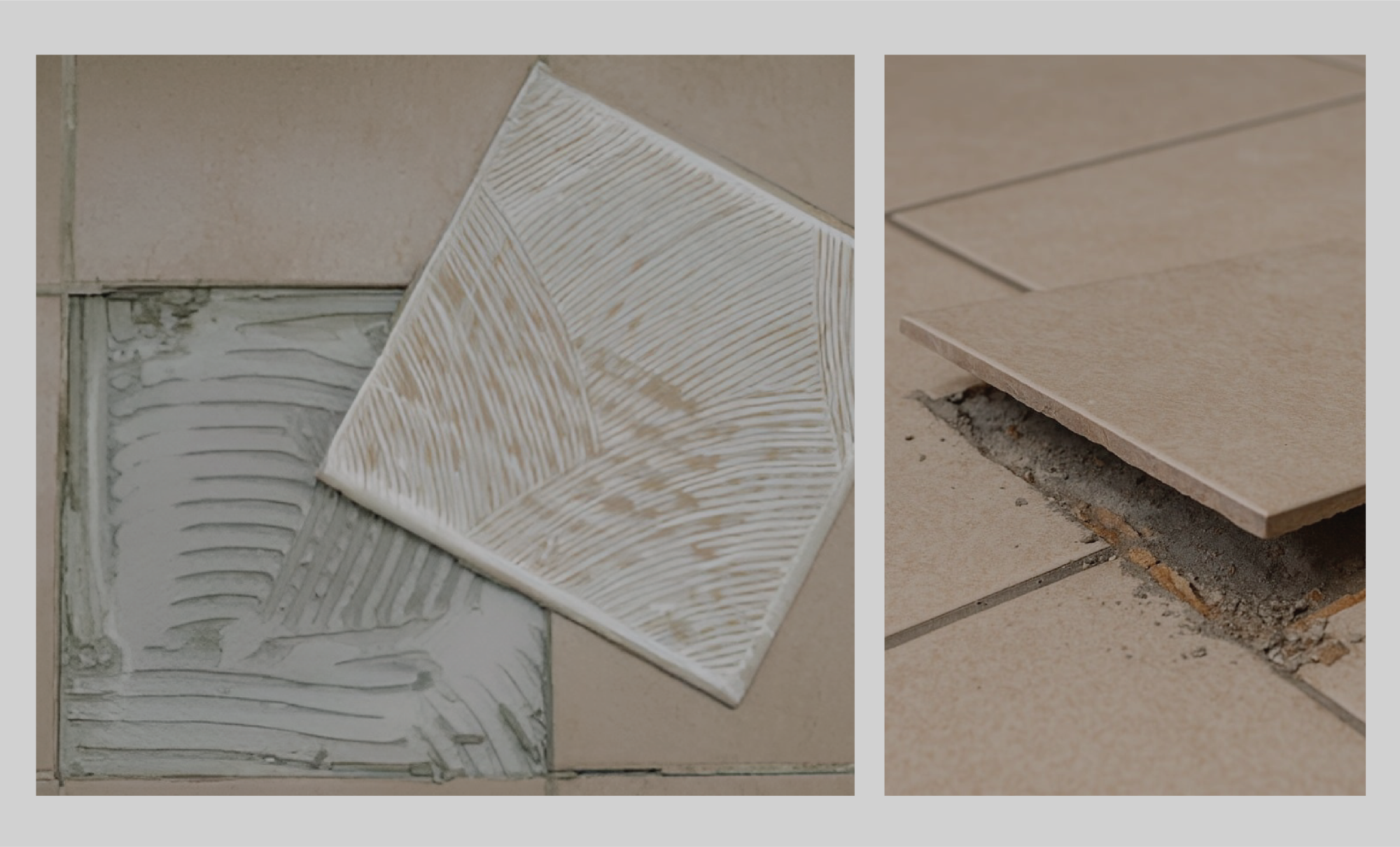
Point Distribution of Tile Adhesive Cement on Tiles:
Uneven distribution of tile adhesive cement creates empty spaces under the tile, which causes cracks to appear during load or temperature changes.
Laying Tiles When the Surface is Almost Dry:
When laying tiles, it is essential to strictly observe the working time indicated on the packaging. The adhesion of tiles placed on dried adhesive is weak, which creates a risk of tiles falling.
For example, when working on a large area, you can choose Kraft K7, while for a small area Kraft K5. The difference is only in open time, which determines the drying speed. Weber products have equal open time and drying time, so they are used on any area - the choice depends on tile size and weight.
Choosing the Wrong Class:
To reduce the budget, choosing the wrong class is common. Using tile adhesive cement intended for indoor work in outdoor spaces causes rapid material failure, although using outdoor tile adhesive cement in indoor spaces is not a problem.
It is also necessary to consider the tile installation location. For example, to lay 60×60 cm or larger tiles on the floor, you can use Weber SRC Max, while laying the same tile on the wall requires Weber Flex Porselen. The same principle applies to Kraft products: K5 is suitable for laying small and medium tiles on the floor, while K7 is used on walls.
It should be noted here that Citadeli is the official representative of WEBER, ALFIL, and KRAFT brands.
If you still think you have additional questions and need professional help, contact us at *7070